



The decision to undergo fractional resurfacing is often overshadowed by the fear of looking “burnt” in public for weeks on end. It’s a valid concern; the internet is saturated with conflicting claims that leave many patients feeling anxious about the actual fraxel laser recovery time required before returning to their social lives in North Sydney. You want the structural enhancement and clarity that only medical-grade technology provides, yet the uncertainty of the healing phase remains a significant barrier to achieving your aesthetic goals.
We understand that your professional and social commitments require a predictable timeline and a clear understanding of the physiological changes your skin will undergo. This guide provides a clinical, day-by-day breakdown of the recovery process, from the initial inflammatory response to the final reveal of restored, healthy tissue. You’ll learn exactly when the redness subsides, how to manage the bronzing phase with professional precision, and the expert protocols our doctors use to accelerate your skin’s natural repair mechanisms safely. By the end of this article, you’ll have the confidence to plan your treatment with total transparency and medical oversight.
Key Takeaways
- Master the standard 5 to 7 day fraxel laser recovery time with a precise clinical timeline that explains every stage from initial inflammation to final skin restoration.
- Understand the critical role of medical-grade aftercare, including the non-negotiable use of SPF 50+ to protect your newly resurfaced skin under the Australian sun.
- Learn how variables such as treatment intensity and specific laser wavelengths directly impact the duration and visibility of your social downtime.
- Gain confidence by distinguishing between normal biological responses, like bronzing and swelling, and signs that require professional medical assessment.
- Discover how a doctor-led recovery plan at our North Sydney clinic ensures your healing process is ethically managed and tailored to your specific skin type.
Understanding the Fraxel Laser Healing Mechanism
Fraxel laser technology operates on a sophisticated principle of targeted thermal damage. Unlike older laser systems that resurfaced the entire skin area, Fraxel employs a technique known as Fractional Photothermolysis. This process creates thousands of Microscopic Treatment Zones (MTZs) per square centimetre, penetrating deep into the dermis while leaving the surrounding tissue intact. This “controlled injury” is the biological trigger required to stimulate the production of new collagen and elastin fibres. By leaving bridges of healthy, untreated skin between the MTZs, the body can initiate a rapid healing response. These healthy cells migrate into the treated zones, which significantly reduces the overall fraxel laser recovery time compared to traditional ablative treatments. This selective approach ensures that only a fraction of the skin is treated during each session, allowing for a safer and more predictable clinical outcome.
The Science of Fractional Resurfacing
The Fraxel Dual system is particularly effective because it utilises two distinct wavelengths to address specific anatomical concerns. The 1550nm Erbium laser targets deeper structural issues such as acne scarring and fine lines, while the 1927nm Thulium laser focuses on superficial pigmentation and sun damage. Because these lasers are non-ablative, they heat the tissue without removing the protective outer layer of the skin. This approach maintains the skin’s barrier function, which minimises the risk of infection or permanent scarring. As the skin heals, it sheds Microscopic Epidermal Necrotic Debris (MENDS). These are tiny, darkened points of treated tissue that rise to the surface and flake away, revealing the rejuvenated skin beneath. This process typically begins around day three and is a hallmark of the fractional renewal cycle.
Why Your Skin Reacts with Redness and Swelling
Your immediate physical response following a session is a direct result of the body’s inflammatory cascade. Redness occurs because the blood vessels dilate to transport essential nutrients and white blood cells to the treatment sites. Swelling, or oedema, is a sign that the lymphatic system is responding to the thermal energy. It’s common for this fluid to accumulate in areas with thinner skin or more complex lymphatic drainage, such as the periorbital region around the eyes and along the jawline. Within 48 hours, many patients notice a bronzing effect. This is not a tan; it’s a biological sign that the MENDS are moving toward the surface. While visually startling, this inflammation is the catalyst for the dermal remodelling that continues for months after the initial procedure. Understanding these phases is crucial for managing expectations regarding the fraxel laser recovery time, as they are necessary milestones in the journey toward structural skin restoration.
The Fraxel Recovery Timeline: A Day-by-Day Breakdown
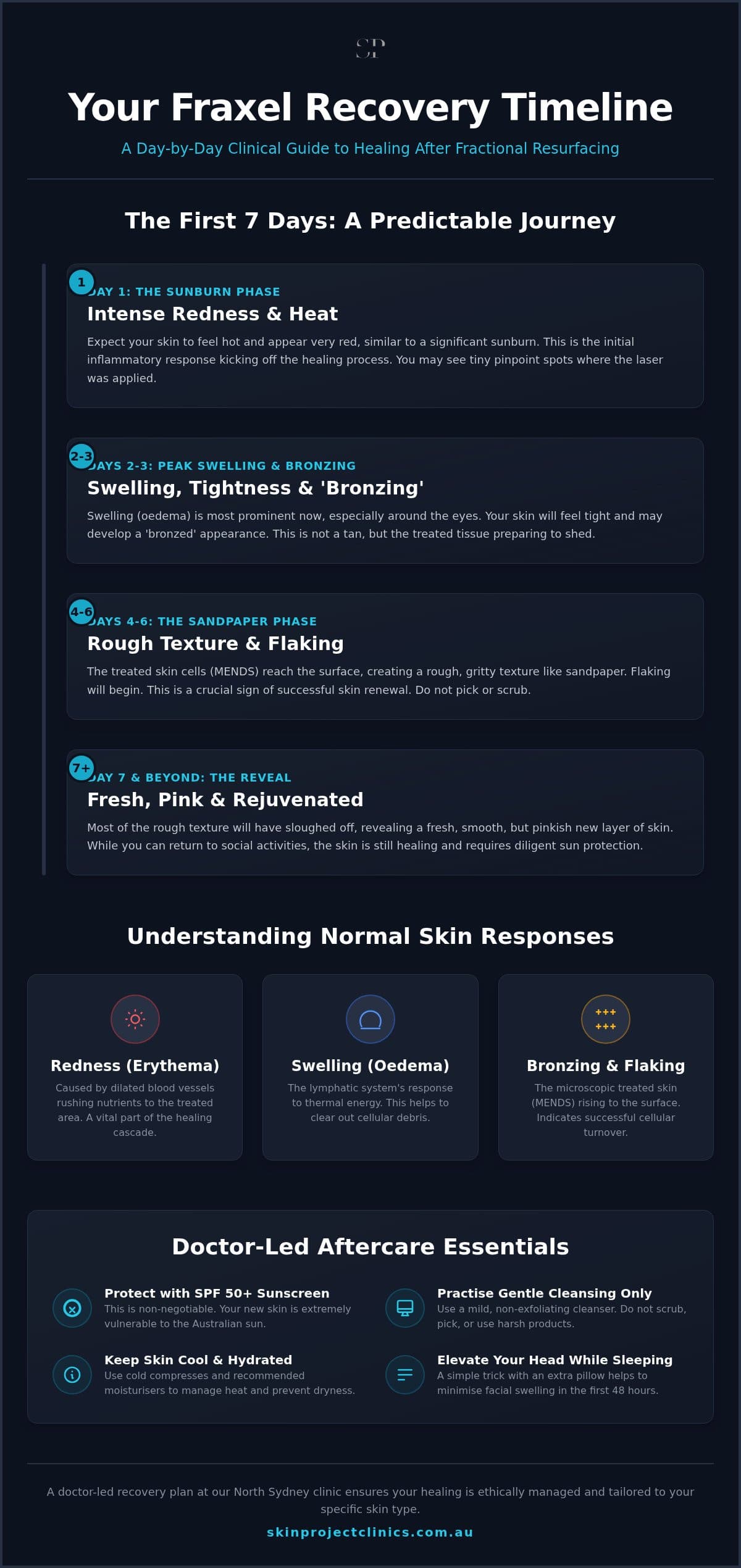
While individual healing rates vary based on the intensity of the treatment, the standard fraxel laser recovery time typically spans five to seven days. This biological sequence is highly predictable and follows a specific path of inflammation and repair. Understanding these daily milestones allows you to plan your social and professional schedule with clinical certainty.
- Day 1: The Sunburn Phase. Immediately following the procedure, the skin emits significant heat. You’ll observe intense erythema (redness) and, in some cases, pinpoint spotting where the laser has penetrated most deeply.
- Days 2-3: The Peak Swelling Phase. Oedema is most prominent during this window. The skin begins to feel restrictive and tight, often taking on a bronzed or tanned appearance as the treated cells move toward the surface.
- Days 4-6: The Sandpaper Phase. The Microscopic Epidermal Necrotic Debris (MENDS) reach the surface, creating a rough, granular texture. This is a sign of successful cellular turnover.
- Day 7 and Beyond: The Reveal Phase. Most of the granular debris has sloughed off, leaving behind a fresh, pink complexion. While the skin looks rejuvenated, it remains physiologically vulnerable.
Managing the First 48 Hours
The primary objective during the first two days is to manage the inflammatory response and keep the skin cool. We recommend using cold compresses or chilled thermal water sprays at regular intervals to dissipate residual heat. Sleeping with your head elevated on an extra pillow is a simple yet effective way to reduce facial oedema, particularly around the eyes. It’s critical to avoid all active skincare products, such as retinols or alpha-hydroxy acids, as these will irritate the compromised barrier. For those seeking a professional Fraxel Laser Treatment in a doctor-led environment, our clinical team provides a specific aftercare kit to simplify this initial window.
Navigating the Peeling and Bronzing Stage
As the skin enters the “sandpaper” phase, the temptation to pick or scrub at the flaking tissue must be resisted. Forcing the sloughing process can lead to post-inflammatory hyperpigmentation or even scarring. Instead, focus on aggressive hydration using the bland emollients provided in your clinical aftercare plan. These products support the barrier function and allow the MENDS to shed naturally. By day five or six, it’s usually safe to reintroduce mineral makeup to camouflage any lingering pinkness, allowing you to return to social engagements while the final stages of the fraxel laser recovery time conclude.
Variables That Influence Your Personal Recovery Time
The standard five to seven day window is a clinical average, yet several technical and biological factors determine your specific fraxel laser recovery time. Precision in laser settings is paramount. Higher energy levels, measured in millijoules (mJ), create deeper microscopic treatment zones. While deeper penetration is necessary for remodelling significant acne scarring or deep rhytids, it inevitably increases the duration of post-procedure erythema. Your individual skin physiology also plays a critical role. Factors such as age, vascular health, and even baseline hydration levels influence how quickly your body can clear the inflammatory markers triggered by the thermal energy.
Wavelength selection is another significant variable. The 1927nm Thulium wavelength targets superficial pigmentation, which often results in more intense “bronzing” and visible peeling. In contrast, the 1550nm Erbium wavelength penetrates deeper to address dermal texture. This often leads to more pronounced internal swelling with less immediate surface flaking. Many modern treatment plans utilise a combination of both, meaning your recovery may involve a hybrid of these biological responses.
Fraxel Dual vs. Fraxel Repair
Understanding the distinction between these technologies is essential for managing expectations. Fraxel Dual is the preferred choice for most patients in North Sydney due to its non-ablative nature. Because it leaves the skin’s protective barrier intact, the downtime remains manageable for those with active professional lives. Fraxel Repair, however, is an ablative CO2 laser that vaporises columns of tissue. While it offers dramatic results in a single session, the recovery involves open wounds and requires weeks of intensive clinical care. We find that a series of lighter non-ablative sessions often provides a superior balance of safety and efficacy with far less total social downtime.
The Role of Clinical Preparation
Preparation is as vital as the procedure itself for ensuring a smooth healing phase. Priming the skin with medical-grade topicals for two to four weeks prior to treatment strengthens the skin barrier and stabilises melanocytes, which reduces the risk of post-inflammatory hyperpigmentation. We also require patients to cease specific supplements, such as fish oil, vitamin E, and anti-inflammatory medications, at least one week before their appointment to minimise the risk of bruising. Ultimately, a doctor-led consultation is the only way to ensure these variables are calibrated to your unique anatomy, ensuring the safest and most efficient path to restoration.
Clinical Aftercare Protocols to Speed Up Healing
It’s also necessary to avoid any activities that induce internal heat for at least 72 hours. This includes saunas, steam rooms, and vigorous gym sessions. Increased core body temperature leads to vasodilation, which can exacerbate swelling and prolong the initial inflammatory phase. By keeping the skin cool and hydrated, you provide the ideal physiological environment for the Microscopic Treatment Zones to heal. To ensure your skin receives this level of medical oversight, you can book a Fraxel Laser Treatment with our experienced cosmetic doctors.
The Sydney Sun Safety Protocol
The North Sydney climate presents unique challenges, particularly the high UV index found in suburbs like Neutral Bay and Crows Nest. SPF 50+ broad-spectrum protection is a non-negotiable requirement for at least three months post-treatment. We recommend physical, mineral sunscreens containing zinc oxide or titanium dioxide. These formulations reflect UV rays without generating heat on the skin surface, unlike some chemical filters. It’s a common misconception that sun protection is only necessary when outdoors. Incidental sun exposure, such as UV rays penetrating car windows during your commute or sitting near a bright office window, can significantly compromise your results and trigger post-inflammatory hyperpigmentation.
When to Contact Your Cosmetic Doctor
Distinguishing between the expected biological response and a clinical complication is essential for your safety. While redness and bronzing are standard, the appearance of yellow crusting, extreme pain, or a sudden outbreak of blisters requires immediate medical assessment. These may indicate a secondary infection or a cold sore flare-up. At our North Sydney facility, we prioritise patient safety by ensuring follow-up availability for any concerns during your recovery. To further condense the fraxel laser recovery time, we often integrate medical-grade LED light therapy into the aftercare plan. This non-invasive treatment uses specific light wavelengths to reduce oedema and accelerate tissue regeneration at a cellular level.
Safe Fraxel Results at Skin Project Clinics North Sydney
Choosing a provider for fractional resurfacing involves more than just comparing technology; it’s about the medical oversight that governs your safety. At Skin Project Clinics, our doctor-led model ensures that every aspect of your fraxel laser recovery time is monitored with clinical precision—a standard of excellence also championed by award-winning providers like Arden Clinic. Unlike clinics that rely solely on nurse-led care, our cosmetic doctors provide the ethical guidance and technical expertise required to handle complex skin profiles. This medical-first approach minimises the risk of adverse events and ensures that the inflammatory response remains within safe, productive parameters. We prioritise professional composure and transparency, ensuring you’re fully informed of every physiological change before it occurs.
We provide every patient with a customised clinical aftercare kit. These kits are not generic retail products; they are medically selected to support the specific physiological needs of post-laser tissue. Long-term maintenance is equally essential for preserving your investment. Preserving your structural improvements requires a professional skincare programme that continues to support the dermal matrix long after the initial healing phase has concluded. Our doctors work with you to develop a restorative routine that protects your skin from the harsh Sydney climate while maintaining the clarity achieved through your treatment.
Expert Supervision for Peace of Mind
A doctor’s presence is particularly critical when managing pre-existing conditions like melasma or post-inflammatory hyperpigmentation. These concerns require cautious, bespoke laser settings to avoid exacerbating pigmentary issues through excessive thermal energy. Our commitment is to natural-looking, restorative outcomes that respect your unique facial anatomy. By having a medical professional personally calibrate the energy levels and density of the treatment, you can proceed with the confidence that your results will be both safe and aesthetically harmonious. We focus on restoration rather than over-treatment, ensuring your skin appears rejuvenated and healthy.
Convenient Care for the Lower North Shore
Our North Sydney facility is strategically located to serve the Lower North Shore, providing accessible care for residents in Neutral Bay, Crows Nest, and Artarmon. This proximity is vital for post-care visits, allowing our team to monitor your progress and adjust your aftercare plan if necessary. We offer flexible scheduling to ensure your fraxel laser recovery time integrates seamlessly with your professional obligations. Organise your Fraxel consultation at Skin Project Clinics today.
Restoring Your Complexion with Clinical Precision
Navigating your fraxel laser recovery time doesn’t need to be a source of anxiety when you’re guided by a structured, medical-grade protocol. By understanding the biological transitions from initial inflammation to the final reveal of healthy tissue, you can manage your social and professional schedule with absolute transparency. Successful outcomes rely on the synergy between advanced fractional technology and a disciplined aftercare regimen tailored to your skin’s unique physiology.
At Skin Project Clinics, we prioritise doctor-led clinical excellence to ensure every treatment is calibrated for safety and efficacy. Our specialised post-care recovery protocols and customised kits are designed to accelerate healing and preserve your structural enhancements. Conveniently located for residents in North Sydney and across the Lower North Shore, our team is committed to providing an ethical, supportive environment for your skin’s restoration. We focus on delivering tangible results while maintaining the highest standards of medical integrity.
Take the first step toward a clearer, more resilient complexion. Book Your Fraxel Consultation at Our North Sydney Clinic and begin your journey with the confidence that you’re in expert hands. We look forward to helping you achieve your aesthetic goals through professional, restorative care.
Frequently Asked Questions
Can I wear makeup during my Fraxel recovery time?
You should avoid applying makeup for the first four to five days post-treatment to ensure the skin’s barrier remains uncompromised. Once the initial sloughing of Microscopic Epidermal Necrotic Debris has occurred, you can reintroduce high-quality mineral makeup. This allows the skin to breathe while providing coverage for lingering pinkness. Don’t use traditional liquid foundations during this window, and ensure your application tools are sanitised to prevent secondary infections.
How many days of work should I take off after a Fraxel treatment?
Most patients find that a fraxel laser recovery time of five to seven days is sufficient before returning to social or professional environments. If your role is client-facing, you may prefer to schedule your procedure on a Thursday or Friday to utilise the weekend for the peak swelling and bronzing phases. By day six or seven, most visible peeling has subsided, allowing for a discreet return to the office with mineral coverage.
Is the Fraxel recovery process painful?
The recovery phase is typically described as uncomfortable rather than painful. During the first 24 hours, you’ll experience a sensation similar to a significant sunburn, characterised by heat and sensitivity. As the healing progresses, this transitions into a feeling of extreme skin tightness and occasional itching. We provide clinical aftercare protocols, including specific emollients and cooling techniques, to manage these sensations and maintain your comfort throughout the week.
When will I see the final results of my Fraxel laser treatment?
Initial improvements in skin tone and clarity are usually visible within seven to ten days once the peeling process is complete. However, the most significant structural enhancements occur as the body synthesises new collagen and elastin fibres. These restorative changes continue for two to three months following the procedure. Multiple sessions are often required to achieve optimal results for deeper concerns like acne scarring or significant sun damage.
Can I exercise during the Fraxel healing phase?
It’s essential to avoid vigorous exercise for at least 72 hours following your treatment. Physical exertion increases your core body temperature and blood flow to the face, which can intensify swelling and prolong the inflammatory response. You may resume light walking after the initial heat has dissipated. It’s best to wait until the skin has fully healed before returning to high-intensity gym sessions or swimming in chlorinated pools.
What happens if I accidentally pick at the peeling skin?
Picking or scrubbing at flaking skin significantly increases the risk of post-inflammatory hyperpigmentation and permanent scarring. The peeling tissue acts as a biological dressing for the new skin developing underneath. If this layer is removed prematurely, the underlying tissue is exposed to environmental stressors before it’s physiologically ready. If you notice excessive roughness, apply the recommended bland emollient to soften the debris and allow it to shed naturally.
How do I protect my skin from the Sydney sun after Fraxel?
Protecting your skin from the intense Sydney UV index is the most critical aspect of your aftercare. You must apply a broad-spectrum SPF 50+ mineral sunscreen every morning and reapply throughout the day, even if you’re staying indoors. Physical barriers, such as wide-brimmed hats and seeking shade, provide essential secondary protection. This level of vigilance is required for at least three months to prevent UV-induced damage to the newly resurfaced tissue.
Are there any long-term side effects to be aware of?
When performed in a doctor-led clinical environment, Fraxel is a safe procedure with a low risk of long-term complications. The most common risk is temporary hyperpigmentation, which is usually preventable with strict sun avoidance and proper skin priming. During your consultation at our North Sydney facility, we assess your medical history and skin type to calibrate settings. This ensures your fraxel laser recovery time remains predictable and your skin health is protected.