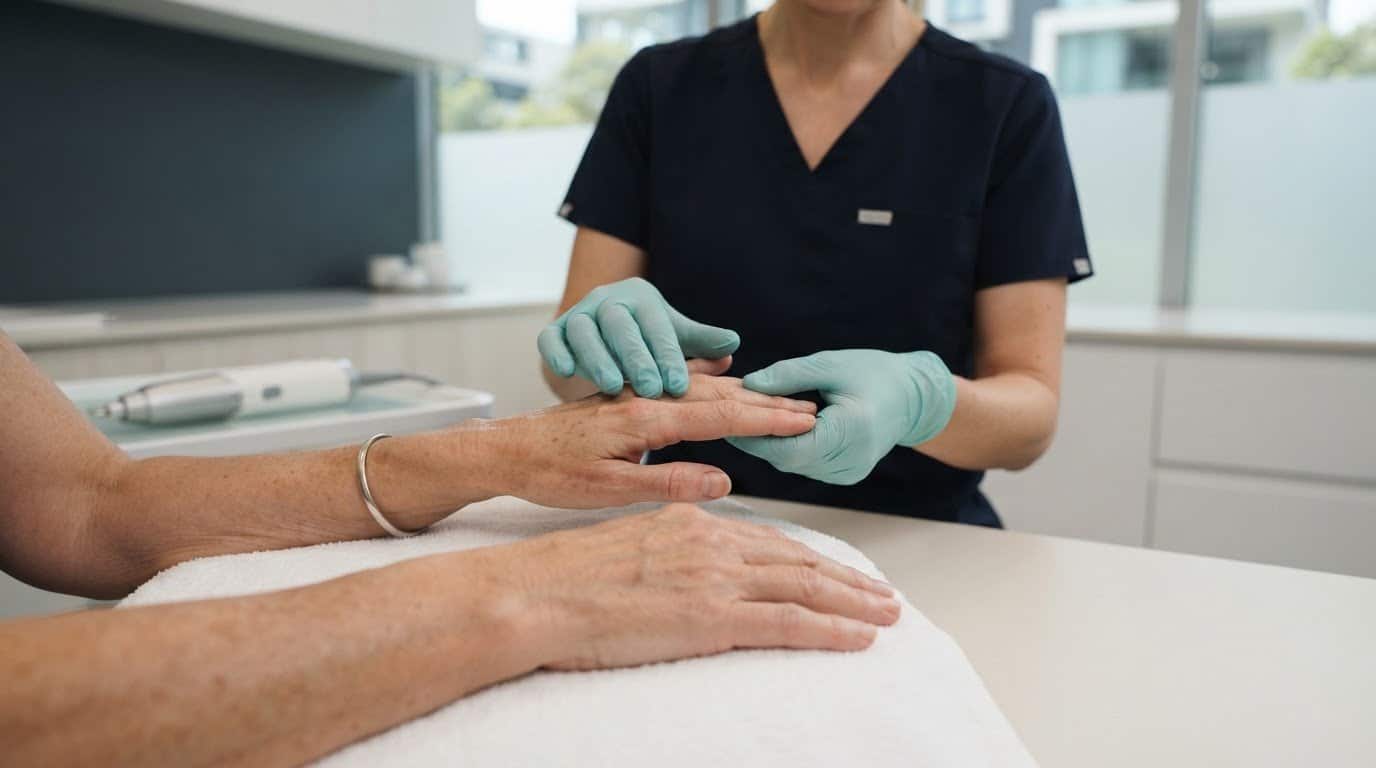



Why can your hands look older than your face, even when you take care with your appearance? Years of sun exposure, including through a car window, can contribute to age spots and uneven texture. Age-related volume loss may also make veins and tendons more prominent. If you’re researching how to get younger looking hands, it helps to understand that these changes affect different layers of the skin and may call for different approaches.
The aim isn’t to make your hands look unfamiliar. It’s to support smoother, fuller-looking skin and address visible sun damage with an approach suited to your concerns. This guide covers clinical options and daily habits that may help your hands feel more in keeping with your facial appearance.
Hand rejuvenation treatments such as dermal fillers and Fraxel laser address different concerns: fillers may restore volume, while laser treatment may improve the appearance of some surface changes. Sun protection is also important. At Skin Project Clinics, hand rejuvenation is provided in a doctor-led setting in North Sydney, where an assessment can help determine which options may suit you.
Key Takeaways
- Thin skin and age-related loss of hand volume can make veins and tendons more visible.
- Consistent SPF 50+ use, including before driving or spending time outdoors, can help limit further sun damage.
- A medical assessment can help identify whether volume loss, pigmentation or skin texture is your main concern.
- Dermal fillers and Fraxel laser may address different signs of ageing, with treatment selected to suit your needs.
- A personalised, doctor-led approach matters when considering hand rejuvenation.
Understanding Why Hands Age: The Clinical Causes
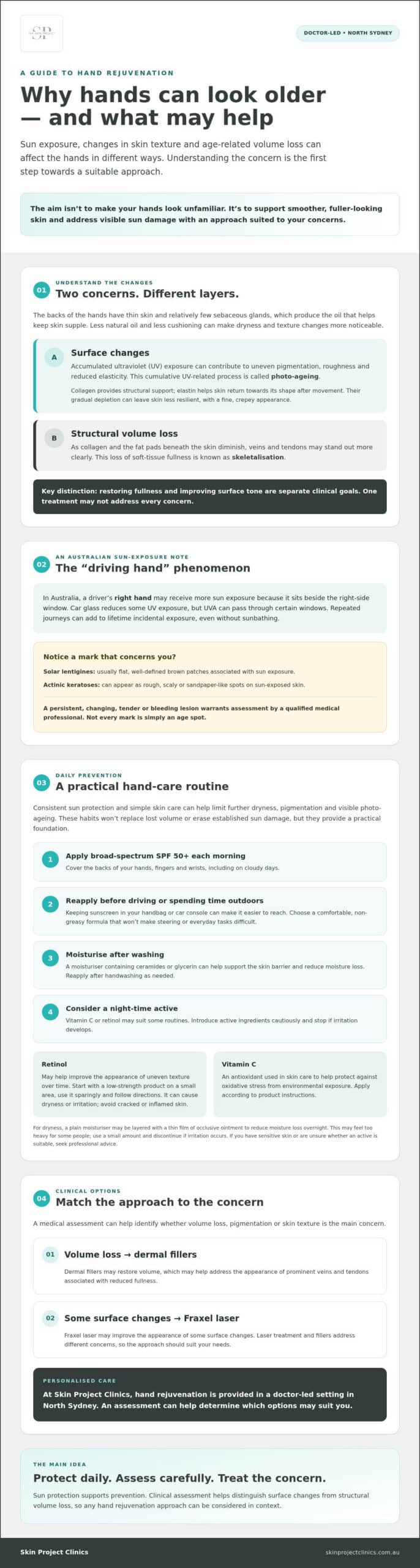
The skin on the backs of the hands is thin and has relatively few sebaceous glands, which produce the oil that helps keep skin supple. With less natural oil and less cushioning beneath the skin, dryness and changes in texture can become more noticeable. Ageing also affects deeper structures: as collagen and the fat pads under the skin diminish, veins and tendons may stand out more clearly. This loss of soft-tissue fullness is called skeletalisation.
Sun exposure adds another layer of change. Ultraviolet (UV) radiation can damage skin-cell DNA, contribute to uneven pigmentation and affect the structures that support elasticity. This cumulative process is known as photoaging. Hand rejuvenation may address both structural volume loss and surface changes, though these are distinct concerns and may need different treatments.
The Role of Collagen and Elastin
Collagen provides skin with structural support, while elastin helps it return towards its shape after movement. Their gradual depletion can leave skin less resilient, with a fine, crepey appearance. Because the backs of the hands have less protective tissue than areas with more natural volume, these changes can become apparent early. Chronological ageing reflects changes that occur over time; photo-ageing results from accumulated UV exposure and may appear as uneven tone, roughness and reduced elasticity.
The “Driving Hand” Phenomenon in Australia
In Australia, a driver’s right hand may receive more sun exposure because it is positioned beside the right-side window. Car glass reduces some UV exposure, but UVA can pass through certain windows. Repeated journeys can add to a lifetime of incidental exposure, even when you’re not sunbathing.
Look for changes rather than trying to diagnose them yourself. Solar lentigines are usually flat, well-defined brown patches associated with sun exposure. Actinic keratoses can appear as rough, scaly or sandpaper-like spots on sun-exposed skin. A persistent, changing, tender or bleeding lesion warrants assessment by a qualified medical professional, as not every mark is simply an age spot.
Understanding which changes relate to volume loss and which relate to UV damage is a useful first step in learning how to get younger looking hands. It also explains why a single treatment may not address every concern: restoring fullness and improving surface tone are separate clinical goals.
How to Get Younger Looking Hands: Daily Preventative Habits
Consistent sun protection and a simple skin-care routine can help limit further dryness, pigmentation and visible photo-ageing. These habits won’t replace lost volume or erase established sun damage, but they’re a practical foundation if you’re considering how to get younger looking hands.
- Step 1: Apply broad-spectrum SPF 50+ each morning. Cover the backs of your hands, fingers and wrists, including on cloudy days.
- Step 2: Reapply before driving or spending time outdoors. Keep sunscreen in your handbag or car console so it’s easy to reach. Choose a comfortable, non-greasy formula that won’t make steering or everyday tasks difficult.
- Step 3: Moisturise after washing. A moisturiser containing ceramides or glycerin can help support the skin barrier and reduce moisture loss. Reapply after handwashing as needed.
- Step 4: Consider a night-time active. Vitamin C or retinol may suit some routines. Introduce active ingredients cautiously and stop if irritation develops.
The Importance of Sun Protection
Daily SPF is a useful preventative step for limiting UV-related changes to the hands. Apply it as part of your morning routine, then reapply before extended outdoor exposure or driving. A small tube in your bag or car console can make the habit easier to maintain. If sunscreen feels slippery, try a different texture rather than skipping coverage altogether.
Night-time Repair Strategies
Retinol encourages skin-cell turnover and may help improve the appearance of uneven texture over time. Start with a low-strength product on a small area, use it sparingly and follow the product directions. Retinol can cause dryness or irritation, so avoid applying it to cracked or inflamed skin. If you have sensitive skin or aren’t sure whether it’s suitable, seek professional advice.
Vitamin C is an antioxidant used in skin care to help protect against oxidative stress from environmental exposure. Apply it according to the product instructions. For dryness, layer a plain moisturiser and, if needed, a thin film of an occlusive ointment over the top to reduce moisture loss overnight. This “slugging” approach may feel too heavy for some people. Use a small amount and discontinue if irritation occurs.
Daily care can support skin comfort and help protect against further sun damage, while established pigmentation or volume loss may need clinical assessment. For information about medical hand rejuvenation, consider discussing your concerns with a qualified clinician.
Restoring Volume with Dermal Fillers
When the soft-tissue padding on the backs of the hands diminishes, veins, tendons and bony contours can become more visible. Dermal fillers may restore some of that lost volume. Hyaluronic acid fillers add volume by attracting water, while biostimulatory fillers are designed to encourage collagen production. A fuller surface can soften the appearance of prominent structures, but it won’t remove them or treat sun-related pigmentation.
Hand injections require precise knowledge of the area’s anatomy, including the position of blood vessels, nerves and tendons. A doctor-led assessment helps determine whether filler is suitable, which type may be appropriate and what degree of correction is realistic. This matters in an area where the skin is thin and underlying structures are close to the surface.
The Hand Filler Procedure
At a North Sydney clinic, an assessment should consider your skin, volume loss, medical history and goals before treatment is planned. A clinician may use a needle or a blunt-tipped cannula to place filler. Each has different uses; the choice depends on your anatomy and the clinician’s technique. Neither guarantees that bruising or other complications won’t occur. The aim is measured correction, not an overfilled appearance.
Results from volume restoration may be noticeable soon after treatment, although temporary swelling can affect the early appearance. A natural result should look softly supported and hydrated rather than puffy. Suitability and expected outcomes vary between people.
Recovery and Aftercare
Mild swelling, tenderness or bruising can occur after injections. Follow the treating clinician’s aftercare instructions and ask what symptoms should prompt follow-up. Some people can resume routine activities soon after treatment, but recovery varies. Don’t assume you’ll be ready to return to work immediately. Consider your own response and any advice given at your appointment, whether you’re based in Artarmon, Neutral Bay or elsewhere.
How long results last depends on the filler used and individual factors. Hyaluronic acid fillers in the hands generally last around 6 to 12 months, while calcium hydroxylapatite filler results typically last 12 to 18 months. These are general ranges, not a prediction for an individual treatment. A clinician can discuss suitable options and likely maintenance during your assessment.
If you’re exploring how to get younger looking hands, filler may address volume loss, while concerns such as pigmentation need a different approach. Read more about dermal fillers in Sydney and discuss whether hand treatment is appropriate with a qualified medical professional.
Repairing Sun Damage: Laser and Chemical Peels
Fillers can address lost volume, but they don’t treat pigmentation or rough skin texture. Surface treatments target these concerns directly. Fraxel laser treatment and chemical peels work in different ways, and suitability depends on your skin, the pattern of sun damage and your medical history.
The skin on the backs of the hands is thin, so treatment settings and depth need careful selection. Fractional laser treatment creates controlled areas of treatment within the skin, supporting renewal and collagen stimulation while leaving surrounding tissue intact. This doesn’t make laser treatment risk-free or suitable for everyone. A clinician should assess the area first, including any spots that need medical review before cosmetic treatment.
Fraxel Laser for Hand Resurfacing
Fraxel may be used to improve the appearance of solar lentigines, also known as sun spots, and uneven texture. Treatment sensation varies; people may experience warmth or prickling. Pigmented areas can darken or look bronzed as the skin heals, and temporary redness or sensitivity may occur. Your clinician should explain expected recovery and aftercare before treatment. Read more about Fraxel laser treatment.
Clinical-Strength Chemical Peels
Professional peels use acids such as alpha hydroxy acids (AHAs) or trichloroacetic acid (TCA) to exfoliate the outer skin and may help improve dullness and uneven pigmentation. Unlike a physical scrub, a peel’s ingredients and application can be selected and managed by a trained clinician. The appropriate strength and depth depend on your skin and the degree of sun damage; stronger treatment isn’t automatically better.
For some people, combining a surface treatment with filler may address more than one concern: laser or a peel targets skin tone and texture, while filler may restore volume. A combination isn’t necessary or suitable for everyone, and treatments may need to be planned in stages. Consistent sun protection remains important after treatment to help protect the skin.
If you’re considering how to get younger looking hands, Skin Project Clinics offers doctor-led hand rejuvenation in North Sydney, including Fraxel laser treatment. Explore hand rejuvenation options and discuss which approach may suit your concerns with a qualified medical professional.
Customising Your Hand Rejuvenation Plan
No two people have the same mix of volume loss, pigmentation, skin texture and laxity. A treatment that suits one person may not address another’s main concern, so a one-size-fits-all plan can lead to unnecessary treatment or disappointing results. If you’re considering how to get younger looking hands, start by clarifying what you want to improve and having your hands assessed by a qualified medical professional.
A doctor-led assessment also supports a safety-first approach. Sun-exposed hands can develop lesions that need medical review. Cosmetic treatment isn’t a substitute for skin-cancer assessment, and a suspicious or changing spot should be assessed before elective rejuvenation is considered. Where needed, the clinician can advise you to seek appropriate medical review before proceeding.
What Happens During Your Consultation?
An assessment can consider skin laxity, volume loss and pigmentation separately, then discuss which concerns may be suitable for treatment. For example, dermal fillers may address volume loss, while Fraxel laser treatment may be considered for some surface changes. Combining approaches isn’t automatically better; the order and suitability of treatments depend on your skin and goals.
Discuss the likely treatment sequence, recovery considerations and costs before deciding. You can also ask whether relevant before-and-after examples are available to help you understand the kind of outcomes that may be achievable. Skin Project Clinics is a doctor-led clinic in North Sydney, offering hand rejuvenation treatments including dermal fillers and Fraxel laser.
Maintaining Your Results
Results and their duration vary by treatment and individual. A consistent home-care routine, particularly sun protection and moisturising, can support skin health between clinical treatments. If you’re considering maintenance or a future “top-up”, ask your clinician what would be appropriate for your treatment and how to judge when reassessment may be useful. There’s no need to follow a fixed schedule without individual advice.
A personalised plan may use more than one treatment over time, but it should be guided by clinical suitability rather than a branded package or a promise of a particular result. Skin Project Clinics serves patients in North Sydney and nearby areas including Kirribilli. A clinical consultation is the next step to discuss your aesthetic goals, review suitable options and make an informed decision without feeling rushed.
Take the Next Step Towards More Youthful-Looking Hands
Understanding how to get younger looking hands starts with recognising that visible ageing can involve both changes in skin tone and loss of underlying volume. Daily sun protection helps limit further UV damage, while clinical options such as Fraxel laser treatment and dermal fillers may address different concerns. The right approach depends on your skin, medical history and aesthetic goals.
At Skin Project Clinics, a doctor-led assessment can help identify suitable options and support careful planning. The North Sydney clinic offers hand rejuvenation, including Fraxel laser and dermal fillers. Your clinician can also advise whether a mark needs medical assessment before cosmetic treatment is considered.
If you’re ready to discuss your concerns and explore a personalised plan, book a hand rejuvenation consultation with our doctors. The clinic is in North Sydney, with access for people from Crows Nest, Artarmon, Waverton, Kirribilli, Lavender Bay, St Leonards, Greenwich, Neutral Bay and Cremorne. A considered first step can help you make an informed choice and work towards hands that feel more in harmony with your overall appearance.
Frequently Asked Questions
Can hand rejuvenation treatments really hide prominent veins?
Dermal fillers can soften the appearance of prominent veins by restoring some volume beneath the skin on the backs of the hands. They don’t remove veins or guarantee they’ll be hidden, and the degree of change depends on your anatomy and the amount of volume loss. A doctor-led assessment can help determine whether filler is suitable and set realistic expectations. Skin texture and pigmentation may need separate treatment.
How long do dermal fillers in the hands actually last?
Longevity varies by filler type and individual factors. Hyaluronic acid fillers in the hands generally last around 6 to 12 months, while calcium hydroxylapatite filler results typically last 12 to 18 months. These are general ranges, not a guarantee for an individual. Your clinician can explain which options may suit your concerns and discuss how your results can be monitored over time.
Is Fraxel laser safe for the thin skin on the back of the hands?
Fraxel may be considered for hand skin, but suitability and settings need to be assessed by a qualified clinician. The backs of the hands have thin skin, so treatment requires careful planning based on your skin, pigmentation and medical history. Temporary redness, sensitivity or darkening of pigmented spots can occur during recovery. A clinician should assess any changing or suspicious marks before cosmetic laser treatment.
Will I need downtime after getting younger looking hands treatments?
Downtime depends on the treatment and your individual response. Fillers may cause temporary swelling, tenderness or bruising, while laser treatment can involve redness, sensitivity and a bronzed appearance as treated areas heal. A chemical peel also has recovery requirements that vary with its depth. If you’re exploring how to get younger looking hands, ask your clinician about aftercare and when to resume your usual activities.
How much does professional hand rejuvenation cost in Sydney?
The cost of hand rejuvenation in Sydney depends on the treatment recommended, the areas addressed and your individual plan. Skin Project Clinics doesn’t publish a single price for every patient’s needs, so request an estimate after clinical assessment. The doctor-led clinic is in North Sydney and may be convenient for people travelling from Crows Nest, Artarmon, Waverton, Kirribilli, Lavender Bay, St Leonards, Greenwich, Neutral Bay or Cremorne.
Are age spots on the hands permanent or can they be removed?
Some age spots, also called solar lentigines, can be improved with treatments such as Fraxel laser or chemical peels, but results vary and further sun exposure can contribute to new pigmentation. Not every brown or rough mark is an age spot. Have changing, bleeding, tender or persistent lesions assessed by an appropriate medical professional before considering cosmetic treatment on the area.
Can I drive myself home after a hand filler procedure?
Whether you can drive depends on how your hands feel after treatment and any instructions from your treating clinician. If tenderness, swelling or discomfort affects your grip or ability to control the vehicle safely, don’t drive. Ask about this before your appointment, particularly if you’re travelling to the North Sydney clinic from nearby suburbs. Follow the clinician’s advice and arrange alternative transport if needed.